The Real Story of Darwin and the Galapagos
As a fan of Malcolm Gladwell’s Revisionist History podcast, I thought I’d try my hand at revisiting just-so stories and misinterpreted tales in my own field.
Like everything in ecology, I come back to evolution, and like everything in modern evolutionary thought, I come back to Darwin. Now this story hardly required much investigative journalism, but it’s something many ecologists reference without knowing much of the backstory.
In undergraduate textbooks, Darwin’s name is almost inseparable from the Galápagos finches: birds whose dramatically different beaks supposedly revealed how natural selection shapes species.
References to Darwin are almost always accompanied by mentions of the Galapagos and, specifically, Darwin’s finches, along with a classic illustrations of beaks adapted to different dietary niches that apparently gave him the idea of natural selection.
Nice story, right? After all, the finches are a wonderful and accessible introduction to the idea of a trait which increases fitness within a particular niche. There is also a wonderful example of adaptive radiation, and the selective pressure of competition, as well as a mainstay of any illustration on such matters.
But this story has a twist: they weren’t even particularly important to Darwin. And, they weren’t even true finches, but members of the tanager family (genus Geospiza).
So how did they become such a symbol of his understanding? To understand the story, we’ll cast our minds back to when Darwin was coming up.
Born in 1809 into a wealthy family in Shropshire, Darwin initially followed a conventional path, being sent to Edinburgh University in 1825 to study medicine. However, he later admitted that he disliked the lectures and neglected much of his formal training. In 1828, he moved to Christ’s College, Cambridge, where he pursued his father’s hope that he would enter the clergy. Instead, it was during his time at Cambridge that Darwin’s interest in natural history began to develop, particularly through his enthusiasm for geology and beetle collecting.
Following his graduation, his friend John Henslow recommended him for a position aboard HMS Beagle, a voyage intended to survey the coastline of South America. The expedition set sail at the end of 1831 and, rather than the planned two years, lasted almost five.
Darwin’s role aboard the ship was primarily geological, alongside collecting natural history specimens for further study. Although the Galápagos Islands now occupy a central place in almost every retelling of his story, they were only a small part of the voyage. Darwin spent around five weeks there, and his observations were focused largely on geology rather than the birds that would later become so famous. In fact, the finches received only a brief mention in his voyage diary. The Beagle eventually returned to England in 1836, where Darwin began sorting through and presenting his collections.
Upon his return to England, Darwin hurried back to Cambridge to begin researching and presenting his collections, funded by his father’s investments.
In January 1837, he presented his plant and animal specimens to the Zoological Society, where John Gould identified the birds Darwin had described as a mixture of species as twelve separate Galápagos finches. As an aside, some accounts criticise Darwin for failing to recognise their significance, but this overlooks nineteenth-century ornithology. As Sulloway (1982) explains, birds were typically classified by plumage rather than beak morphology, and the Galápagos finches were unusual precisely because their plumage was similar while their beaks varied dramatically. But even after Gould’s identification, the finches were not the sudden revelation that later stories would suggest.
So if Darwin didn’t discover natural selection on the Galápagos, when did he?
The answer is, gradually. In the years that followed came the slow and storied process that has so often been compressed into a single eureka moment. By mid-March 1837, barely six months after returning to England, Darwin was already speculating that “one species does change into another” as he continued working through his collections and thinking about the mutability of species. Many biographical accounts highlight his later reading of Malthus’ Essay on the Principle of Population. Malthus argued that populations grow until they are checked by limited resources, and Darwin realised this provided a mechanism by which “favourable variations would tend to be preserved, and unfavourable ones to be destroyed.” He later connected this directly to what he had observed in selective breeding.
The finches took time to earn their now-famous place in the story. Darwin’s 1839 publication Voyage of the Beagle made little meaningful mention of them, while the second edition in 1845 included greater discussion of their morphology and variation, including the “perfect graduation in the size of the beaks in the different species.”
Yet while the finches were beginning to earn little more attention, Darwin was thinking about another species: barnacles. Prompted in part by contemporary Hooker’s criticism that his grasp of taxonomy was weak, he embarked on a long, detailed study that lasted about eight years. This work established him as a reputable biologist, even though he later confessed, “I hate a barnacle as no man ever did before.”. Only after this long period of collecting evidence, refining ideas, and testing them against detailed biological work did Darwin finally publish On the Origin of Species in 1859: this, more than two decades after the Galápagos voyage.
Perhaps the final nail in the Galápagos’ coffin is that, in the opening lines of On the Origin of Species, Darwin himself pointed to South America as his inspiration.
So, if the finches were not central to Darwin’s own theory, how did they become the symbol of it?
The association we see today emerged largely after Darwin’s lifetime.
Following Darwin’s death in 1882, by which time the success of On the Origin of Species and his later works had made him one of the most influential scientists of the century, early post-mortem accounts of Darwin’s work were fairly faithful to the source material. They mentioned a wide variety of materials that informed his theory without particular mention of this tale and made it clear that these ideas were formed after the voyage.
In 1935, the centenary of Darwin’s 1835 visit to the islands, Percy Lowe, curator of birds at the Natural History Museum, coined the term “Darwin’s Finches” at a meeting focused on Darwin and the Galápagos. The birds had become a particular interest among ornithologists because they posed a fascinating evolutionary puzzle: how could such closely related species coexist on the same islands? David Lack, then a young ornithologist, was encouraged to investigate them further, and sent to the Galapagos. Working within the context of the emerging neo-Darwinian modern synthesis, which sought to unite Mendelian inheritance with Darwinian natural selection, Lack showed how differences in traits such as beak morphology could allow closely related species to specialise on different ecological niches.
So it is becoming clearer how the association developed. As Sulloway has pointed out, Lack’s publication “was a return to Darwin’s own version of evolutionary theory after nearly a century of disputes among rival doctrines.” It is therefore easy to see how this new understanding of the finches became intertwined with Darwin’s own understanding of natural selection. Arguably Darwin’s finches became famous not because they inspired Darwin, but because later they clearly demonstrated he had already developed.

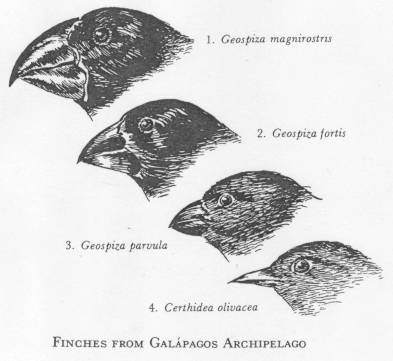
Figure 1: Woodcut from Journal of Researches, Darwin (1845),
Figure 2: M. E. Selsam ed. The voyage of the Beagle. (Tadworth, 1959)
An abridged edition of Voyage of the Beagle was published in 1959 by Millicent Selsam, with illustrations by Anthony Ravielli. In it, the finches from Darwin’s 1845 Journal of Researches were rearranged to resemble one of those ascending evolutionary scale images (van Wyhe, 2012).
By the 1960s, the simplified narrative had emerged: Darwin discovered evolution on the Galápagos by noticing the variation in finch beaks.
Influential popular accounts further cemented this story. Most prominent was David Attenborough’s Life on Earth (1979) and its accompanying book. It presented audiences with the narrative that Darwin’s finches were central to the development of his theory of natural selection, stating that Darwin had noted variation in beak morphology and “regarded them as powerful evidence for his theory of natural selection.” Although this account was later partially corrected in Attenborough’s Charles Darwin and the Tree of Life (2009), where he acknowledged that Darwin did not recognise the significance of the finches until much later, but still highlighted them, and besides, the earlier portrayal had already placed them in the popular imagination (van Wyhe, 2012).
So while researching this story, I thought about my own preconceived notion of what scientific discovery looks like. I mean, I do know that nowadays whole teams of scientists work on things, but it can be hard to shake the historical impressions of single-handed science. The stories we tell ourselves about how scientific discovery happens matter, and we’ve inherited a whole mythology of lone geniuses and their eureka moments; Newton’s apple, Archimedes’ bath, Darwin’s finches. These examples illustrate their point so neatly that they become the single moment of discovery in many people’s minds.
But there is no single point. Even for those who had a wealth of contemporaries, and a father to subsidize their exploits, the real process was slower, more difficult, and much more collective than the myth.
References
Darwin, C. (1839). Journal of researches into the geology and natural history of the various countries visited by H.M.S. Beagle. London: Colburn.
Darwin, C. (1845). Journal of researches into the natural history and geology of the countries visited during the voyage of H.M.S. Beagle round the world. London: Murray. 2d ed.
Lack, D. (1947). Darwin’s Finches; reissued in 1983 by Cambridge University Press with an introduction and notes by Laurene M. Ratcliffe and Peter T. Boag)
Sulloway, F. J. (1982). Darwin and His Finches: The Evolution of a Legend. Journal of the History of Biology, 15(1), 1–53. https://www.jstor.org/stable/4330800
van Wyhe, J. (2012). Where do Darwin’s finches come from? The Evolutionary Review, 3(1), 185–195.


Leave a comment